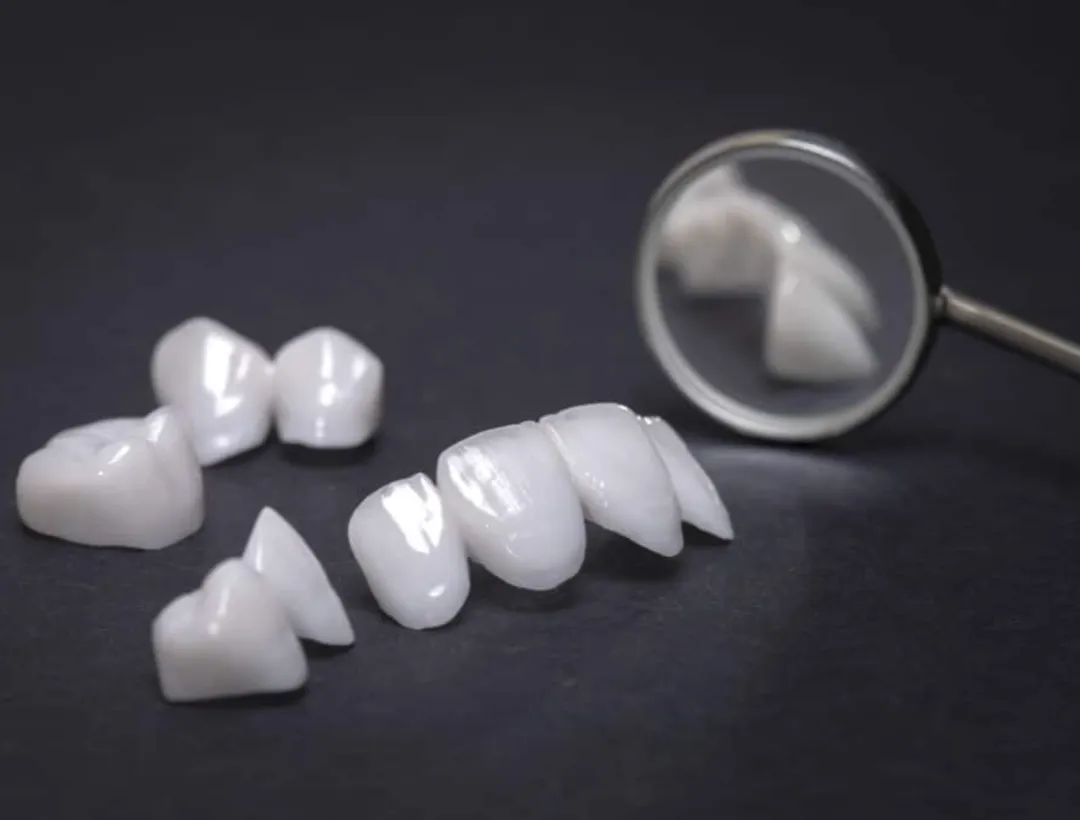
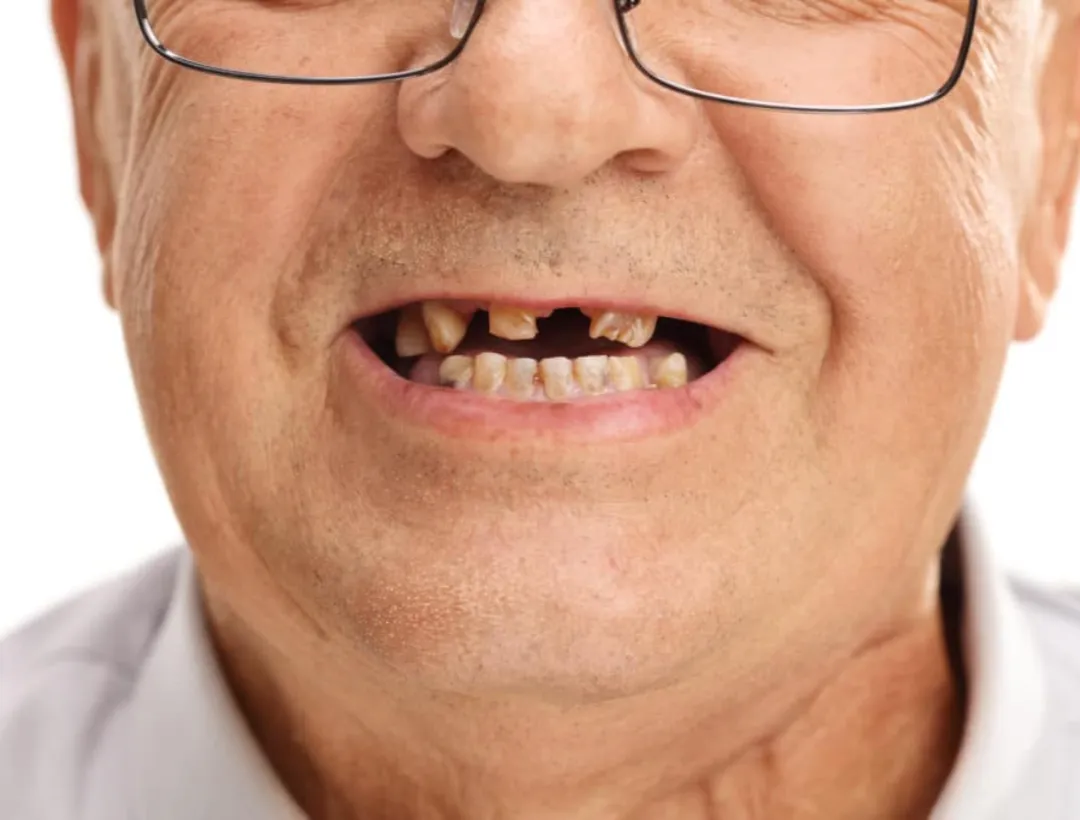
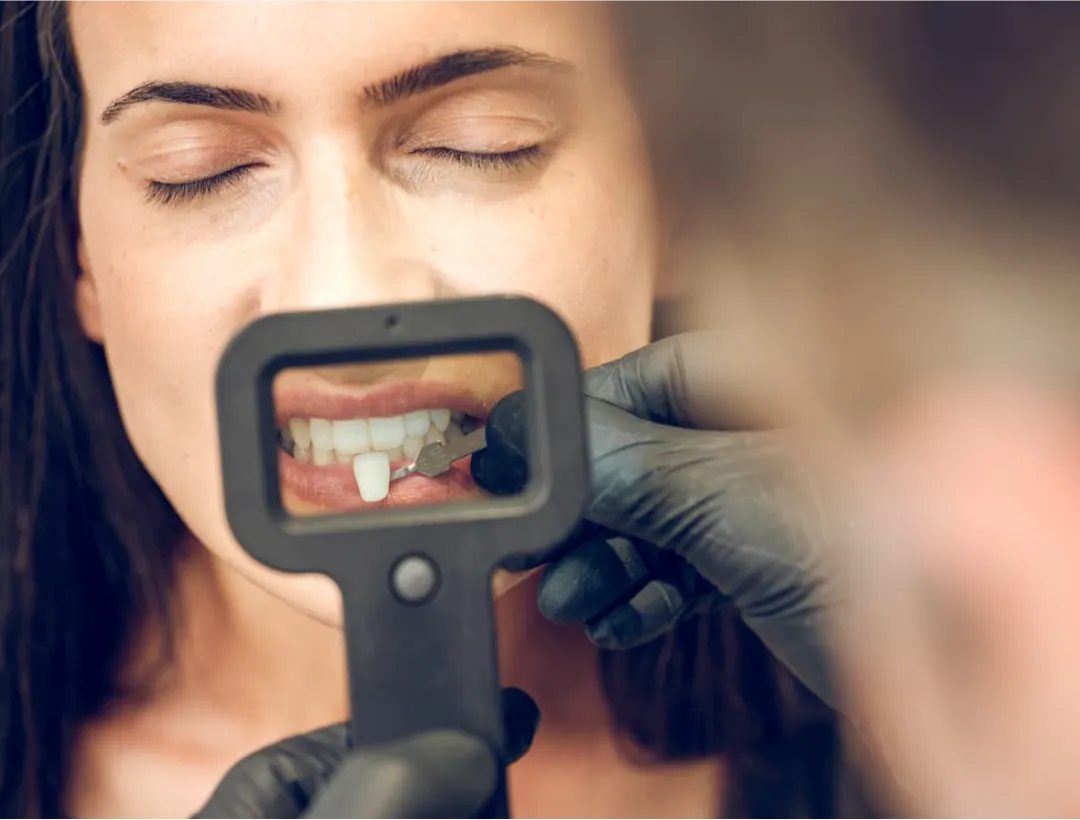
If you know an older person, he or she may refer to a crown as a “cap.” It’s a good way to think of a crown since a crown basically provides a cap over the top of a damaged tooth. Crowns are made of porcelain and they cover the entire visible portion of the tooth down to the gumline. If a tooth has either an overly large filling or other serious damage, it may not survive if left as is. We place a porcelain crown over the damaged tooth. This prosthetic provides strength for chewing and daily use. Crowns can also cover misshapen teeth and can fill gaps between teeth. When it comes to dental bridges, crowns are used as anchors on each side of the missing tooth or teeth.
Dental Crown Placement Process
First, we prepare the tooth to be crowned. We remove any decay or damaged areas, and then the tooth is cleaned. Next, 1-2 mm of the tooth’s enamel is removed on all sides and on the top. Why? This is necessary to make room for the crown that will overlay the tooth. Once the tooth is shaved down, we take various measurements.
From routine checkups to full smile restorations, we provide the general and restorative care you need to keep your mouth healthy and your confidence intact.
Trustindex verifies that the original source of the review is Google.
The staff and my dentist at Clear Lake Dental Care took great care of me. They made what had been a horrible experience in my past - a wonderful outcome. I am thankful for them to be headed in a positive direction in their Care.
Posted on Google
Karen Grubbs
Trustindex verifies that the original source of the review is Google.
No waiting, friendly staff , professional work, reasonable price.
Posted on Google
andrea wright
Trustindex verifies that the original source of the review is Google.
I was well taken care of. They called me back early and was very knowledgeable. Thank you.
Posted on Google
sarah Plain
Trustindex verifies that the original source of the review is Google.
The short version: My teeth have always been JACKED UP and Clear Lake Dental gave me a smile I can actually enjoy 😁.
The long version: When I was a kid I lived in a small country town (not great health care or dental available), at 12 years old the local dentist told my family that my 4 front teeth needed to be removed and porcelain veneers put in. The many dentist that I have been to as an adult all say that they have never heard of veneers being put in that young 🤷♀️ so idk how "necessary" it really was 🙄 anyways...that dentist put in HORRIBLE veneers! They were huge and when I mentioned how big they were, the dentist said "Oh, that's because as you age, you'll grow into them"...spoiler...I definitely did not. They were giant and crooked for 13 years before they finally started getting loose. The teeth under the veneers (that had been shaven down) were starting to crack underneath which gave the veneers nothing to hold onto. I went to your regular castle dental type of dentist when I noticed they were loose. I was SO worried that if any fell out then I would look so dumb. I begged the dentist to address and fix the problem as soon as possible to avoid me having to walk around with any gaps...that dentist told me "Oh we see teeth much more loose than this and they stay in for weeks or months longer!" ...my tooth fell out that weekend 🤦♀️ Needless to say that I realized my situation needed someone with more "specialized" care than an average dentist. So I went to Clear Lake Dental. They were AMAZING 👏 . After my previous experiences I had horrible dentist anxiety but they were so informative and gental that it was actually a pleasant experience. I knew I wouldn't be able to afford to replace my veneers with more veneers so we decided on a denture flipper. I love it! I think my smile looks sooo much better and it fits well and is easy to take in and out. I'm even able to eat with it in. I only remove it to sleep and then pop it back in in the morning.
Posted on Google
Mr.Cory Davis
Trustindex verifies that the original source of the review is Google.
Great dental experience , I went in to have a back molar extracted and it was quick and painless. The staff and doctor was very comforting and informative.
Posted on Google
Regan Bjerkeli
Trustindex verifies that the original source of the review is Google.
Dr. Tajdin, Jazmin, and Jolee are absolutely amazing.
Posted on Google
Crystal Royal
Trustindex verifies that the original source of the review is Google.
Monick H. is always so kind and professional! My sons truly enjoys his visits with her! Highly recommend!
Posted on Google
Richard Castillo
Trustindex verifies that the original source of the review is Google.
The hygienist was professional, courteous, made an effort to explain the procedure to me. She took her time. I didn't feel like I was rushed through. She made some recommendations for the future that I intend to follow. All in all a great experience. I would recommend unconditionally.
Posted on Google
Anita Cadtillo
Trustindex verifies that the original source of the review is Google.
This has been the best Dentist office and I choose to get all my dental work done there. I recommend to all my friends and family. They are the best and very professional. Thank you for all that yall have done for my family.
What Is A Dental Bridge?
As the name implies, a dental bridge spans the gap created by a missing tooth or teeth. Like a bridge you drive across, a dental bridge has three parts: two crowns (called the abutment teeth) on each side of the gap and the span in the middle. In this case, the span is an artificial tooth or teeth (called the pontics). Bridges are made as a single piece and are permanently cemented onto the two abutment teeth.
This is a description of a traditional bridge, but “cantilever bridges” are used when there are healthy teeth for anchoring on only one side of the missing tooth or teeth. “Maryland bridges” are used on the front teeth.
How Is A Dental Bridge Placed?
Like our veneers, porcelain bridges require two visits to our office, but you will leave with a beautiful temporary smile after just one. First, we prepare the two abutment teeth for their crowns. Once the teeth are prepared, we take various measurements and send them to our lab to create the bridge.
While your new bridge is being prepared, we will place a temporary bridge to give you a beautiful smile while protecting your prepared teeth. When your new bridge is finished, you will come back to our office and we will make sure the bridge matches your adjacent teeth. We will then permanently cement the bridge onto your teeth to give you a beautiful, long-lasting smile.
Ready to Schedule Your Visit?
Get the healthy, confident smile you want with full-service dental care in a comfortable, caring office.